A guide for engagement ring shoppers without perfect credit
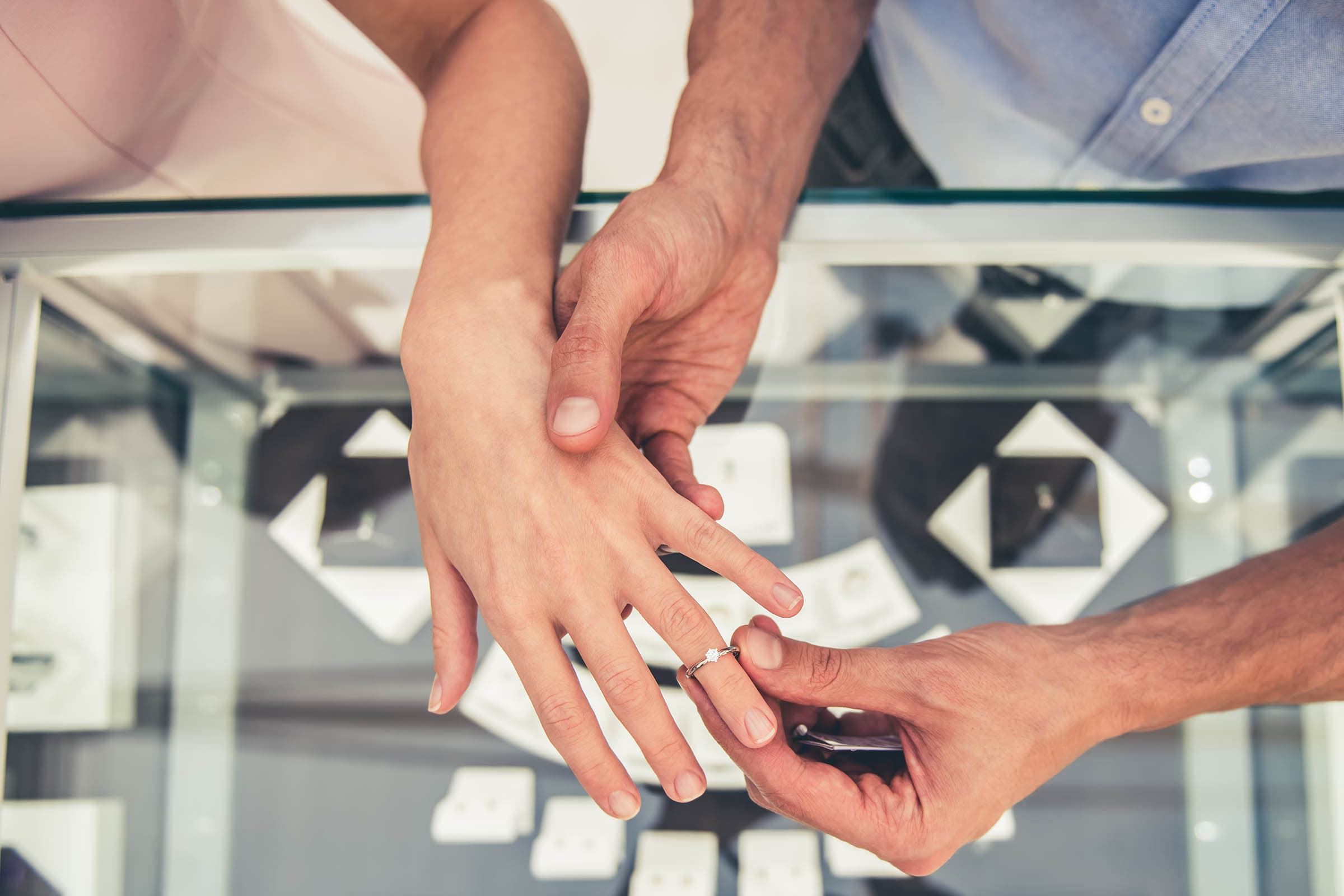
The perfect engagement ring isn't determined by a salary rule or a specific price tag. Learn how to create a realistic budget, avoid common jewelry markups, and pay over time for your ideal engagement ring without perfect credit.1
Key takeaways
Forget the salary rule. The "three months' salary" guideline was marketing, not financial advice. Your budget should reflect your finances and goals as a couple.
Bigger isn't always better. Lab-grown diamonds, strategic carat weights, and smart setting choices can help you maximize value without increasing your budget.
Consider both the payment amount and your overall budget. If financing, start with a payment amount that fits your cash flow, then choose a ring that falls within that range.
Applying for Snap Finance’s lease-to-own financing does not impact your FICOⓇ score.1 Pay over time for the ring you want, no credit required.1
Engagement ring spending criteria? Ignore it. Here’s what actually matters.
From emotion to symbolism to value, buying an engagement ring is one of the biggest purchases people make in their life – and it's also one of the most heavily marketed.
For decades, buyers have been told that an engagement ring should cost one months’ salary. Then it became two months’ salary only for it to later evolve to three months' salary. The problem with these guidelines is that they were never based on sound financial planning or individual circumstances. The idea originated from advertising campaigns created by De Beers in the late 1930s and evolved over time into the salary-based "rules" many people still hear today. The goal was simple: sell more diamonds. It was marketing, not money advice.
Today’s engagement ring buyers are taking a different approach. Rather than following outdated spending rules, many are balancing what they want with what makes sense for their budget and long-term financial goals. Even so, engagement rings remain a significant purchase. According to The Knot, the average engagement ring in the United States costs about $5,200, though averages are heavily influenced by higher-end purchases.
Additionally, buyers have more options that can help them find that balance. According to The Knot's 2024 Real Weddings Study, 52% of couples reported that their engagement ring featured a lab-grown center stone which can cost 50-70% less. For many buyers, lab-grown diamonds offer a way to get a larger or higher-quality stone while staying within budget.
Even with these shifts, financing engagement rings remains popular. However, for buyers with less-than-perfect credit, traditional financing isn’t always accessible. Snap Finance offers lease-to-own financing designed to help more shoppers access the financing they need. Not only is perfect credit not needed, but applying does not affect your FICO® score.1
With the ability to pay over time, the right ring may be more attainable than you think. In this guide, we'll cover how to set a budget, choose between mined and lab-grown diamonds, avoid common upselling tactics, and understand your financing options so you can shop with confidence.
How much should you spend on an engagement ring?
Ignore the salary rules entirely
Let's debunk the biggest myth. There is no universally correct amount to spend on an engagement ring. Not one month's salary. Not two months. Not three months.
The right amount depends entirely on your financial situation, your partner's preferences, and the goals you share as a couple.
A buyer earning $60,000 annually and saving for a home may make a completely different decision than someone earning the same amount with no debt and a large emergency fund. Both choices can be equally reasonable.
The mistake many buyers make is starting with a number they think they're supposed to spend and then trying to justify it afterward.
A better approach is to start with your actual finances. Start by asking yourself: What can I comfortably afford? What other financial goals do we have? Will this purchase create stress after the proposal? Would we rather use some of this money elsewhere?
An engagement ring should represent your commitment, not become a source of financial tension.
Have a conversation with your partner before you shop
Many people view engagement ring shopping as a surprise – while the proposal may be a surprise, the budget shouldn't be.
Before shopping, have a discussion with your partner about financial goals and preferences. Some people care deeply about having a ring they'll wear every day for decades. Others would gladly choose a smaller stone if it meant putting more money toward a future home, wedding, honeymoon, or savings account.
Neither perspective is right or wrong. What matters is understanding what your partner actually values. A simple conversation before shopping can prevent a lot of stress later. Start by asking them: Do you prefer a larger stone or a higher-quality stone? Are you open to lab-grown diamonds? Do you want a classic style or something more unique? Would you rather spend less and save more?
The goal isn't to find the "right" answer – it's to find the ring that reflects both your partner's preferences and your shared financial goals.
A practical framework for non-prime buyers
Many shoppers focus on the maximum amount they're approved for – which, in the case of Snap Finance’s lease-to-own financing, is up to $5,000.2 But doing so can push you beyond your budget. Rather, focus on a payment amount that fits within your budget while also evaluating the total cost of the purchase.
For example, if a certain monthly payment leaves plenty of room for rent, groceries, transportation, savings, and emergencies, that may be your ideal target.
Work backward from the weekly or monthly payment, not forward from a price tag you feel pressured to reach. The best ring purchase is often the one that leaves room for everything else you want to build together.
Mined vs. lab-grown diamonds: What to know
The short story
For many buyers, choosing between a mined and lab-grown diamond is the biggest decision after setting a budget. What makes them different? The short answer: lab-grown diamonds are real diamonds. They are chemically, physically, and visually identical to mined diamonds, with the primary difference being their origin. Mined diamonds form naturally underground over billions of years, while lab-grown diamonds are created in controlled environments that replicate those conditions. To the naked eye, they look the same.
This is one reason lab-grown diamonds have become so popular – for most buyers, the biggest practical difference is price. At comparable quality levels, lab-grown diamonds typically cost significantly less than mined diamonds, often allowing buyers to choose a larger stone or higher quality while staying within the same budget. For shoppers focused on maximizing value, they're often worth serious consideration.
The long story
The lab-grown vs. mined diamond conversation includes many other variables such as resale value, rarity, personal preferences, and long-term market trends. Get a full look into what buyers get wrong about quality and value when comparing diamond and lab-grown.
How to avoid getting oversold on an engagement ring
In-store tactics to watch out for
Most jewelry sales professionals are knowledgeable and genuinely helpful. However, it's important to remember that part of their job is helping customers spend more. That can sometimes show up in the form of subtle upselling, such as suggestions that you "really need" at least a one-carat diamond, recommendations to upgrade the stone or setting, comparisons to what other customers typically spend, or claims that a branded diamond is worth a significant premium over a similar unbranded option.
While these recommendations may be well-intentioned, they aren't always aligned with your budget or priorities. The best way to avoid overspending is to walk into the store with a clear budget and a clear understanding of what matters most to you and your partner. When you've already decided what you're comfortable spending, it's much easier to evaluate recommendations objectively instead of being influenced by someone else's idea of what your ring should cost.
The "magic carat" pricing trick
One of the easiest ways to maximize your engagement ring budget is to avoid milestone carat weights. Diamond prices often surge at certain thresholds, such as 1.00, 1.50, and 2.00 carats. As a result, buyers can end up paying a significant premium simply to reach a round-number weight.
The good news is that most people can't tell the difference between a milestone carat weight and a diamond that's just below it. A 0.97-carat diamond can look nearly identical to a 1.00-carat diamond, just as a 1.45-carat stone can resemble a 1.50-carat stone. Shopping just below these milestone weights is one of the simplest ways to maximize value. While most people won't notice the difference in size, your budget almost certainly will.
Settings that impact perceived size
The center stone isn't the only factor that affects how large an engagement ring appears – the setting can have a significant impact as well. For example, while a solitaire is one of the most timeless and popular choices, it showcases the center stone exactly as it is. In contrast, a halo setting surrounds the center stone with smaller diamonds, creating the illusion of a larger center stone. An alternate option is a hidden halo, which can add visual presence and sparkle without dramatically changing the ring's appearance from above.
None of these settings are objectively better than the others. They're simply different ways to balance appearance, style, and budget. Understanding these trade-offs before you start shopping can help you narrow your options and make a more confident decision.
The complete guide
While in-store sales tactics, carat weight, and setting variations are among the most important things to keep in mind, there are other key things to consider. Metal quality, craftsmanship, warranty coverage, durability, and brand markups all affect long-term value. Learn how to shop for fine jewelry on a budget without buying something that won’t last.
How to use Snap’s lease-to-own financing for an engagement ring
1. Find a participating jeweler
Before heading to a jewelry store, be sure to find a participating retailer using Snap’s Store Locator. Many independent jewelry stores and national retailers work with Snap Finance.
Once you’ve confirmed that the store accepts Snap Finance, it’s time to apply.
2. Apply for lease-to-own financing
One last step before heading into the store: apply for Snap. Knowing your approved amount ahead of time can give you a clear understanding of the budget you're working with, and therefore avoid stress, confusion, and uncertainty in store. Instead of relying on a salesperson to tell you what's "within your budget," you'll already know the spending range you're comfortable considering. That allows you to focus on finding the right ring rather than navigating financing decisions in the middle of the shopping process. You can also quickly apply in-store if you’d rather.
What a Snap lease looks like
Snap Finance offers multiple payment plans with different payment amounts and durations, including early ownership options to help you save on lease costs.3
Learn how Snap's lease-to-own financing works for engagement rings and other jewelry purchases, from what type of jewelry can be covered to shopping wisely on a budget.
What to do after the proposal
Insure it immediately
The proposal may be over, but there are still a few important steps to take – potentially the most important of which: arranging insurance. Many homeowners and renters insurance policies allow jewelry coverage to be added, and dedicated jewelry insurance policies are also available. Coverage is often more affordable than people expect and can provide valuable peace of mind. A lost ring, stolen ring, or damaged stone is stressful enough emotionally. Insurance helps prevent it from becoming a major financial setback as well. Ideally, coverage should be arranged within the first week after the proposal.
Check with your insurance provider to see if a policy is available to you to insure a leased item. While coverage availability can vary, insuring leased jewelry may be an option for you. Once you've completed the terms of your lease and take full ownership, insuring your jewelry may also be an option to consider.
Schedule annual check-ups
Most reputable jewelers offer complimentary inspections, and it's worth taking advantage of them. Over time, normal wear can loosen prongs or create minor issues that are easy and inexpensive to repair when caught early. A quick annual inspection can help identify potential problems before they lead to a damaged setting or lost stone. Think of it as routine maintenance for a piece of jewelry you'll hopefully wear for decades.
Plan the wedding band before the wedding
Planning ahead for wedding bands can help avoid unnecessary complications. Certain engagement ring styles pair best with specific band designs, and different metals can wear differently over time. Considering both pieces together can help ensure a cohesive look and avoid surprises later. It can also be a good opportunity to revisit your overall wedding budget, discuss any early payoff opportunities on your engagement ring lease, and determine how wedding bands fit into your financial plans.
Ready to pop the question?
Now that we’ve divorced the “months’ salary” rules and determined that the best engagement ring is the one that you and your partner love both aesthetically and financially – you’re ready to apply for Snap. Already approved? Find your perfect match using Snap’s Store Locator.
The advertised service is a lease-to-own agreement provided by Snap RTO LLC. Lease-to-own financing is not available to residents of Minnesota, New Jersey, and Wisconsin.
1 Not all applicants are approved. No credit history is required. Snap obtains information from consumer reporting agencies in connection with your application; this does not impact your FICO® Score, though other credit scores may be affected.
2 Approval amounts vary from $300 to $5,000, subject to underwriting, and apply only to the cash price of leased items.
3 The Maximum-Term Plan includes 12–18 month renewable terms and is your highest-cost option. To exercise an early ownership option, including any early buyout promotions, you must make all required payments on time and satisfy the required amount within the applicable timeframe through the customer portal or by contacting Customer Care at 1-877-557-3769. Early buyout promotions may include a cost of lease above the merchandise price. For details and limitations, refer to your lease agreement. See lease agreement for terms, details, and limitations.