The real reason your tires wear out faster – and what you can do about it
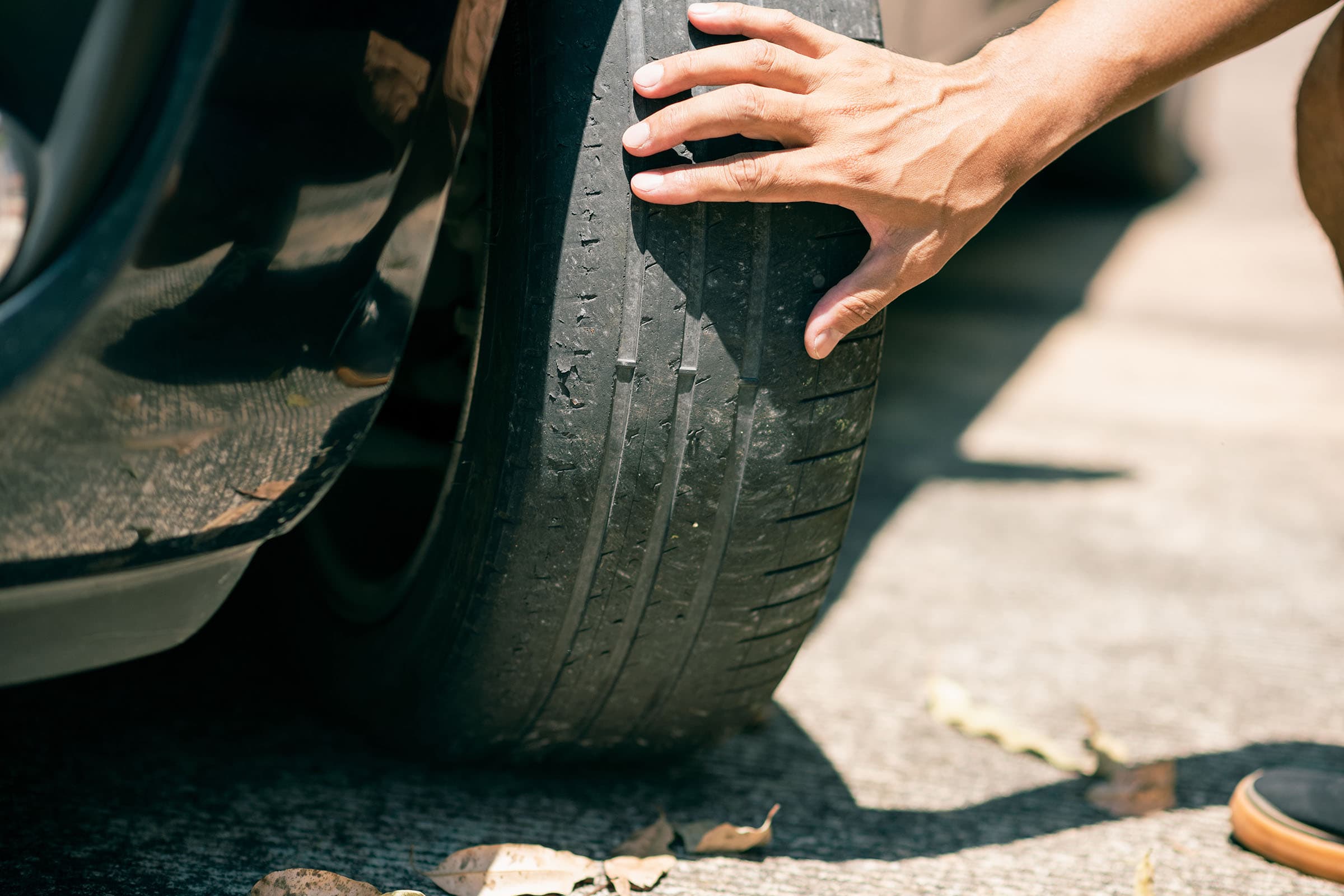
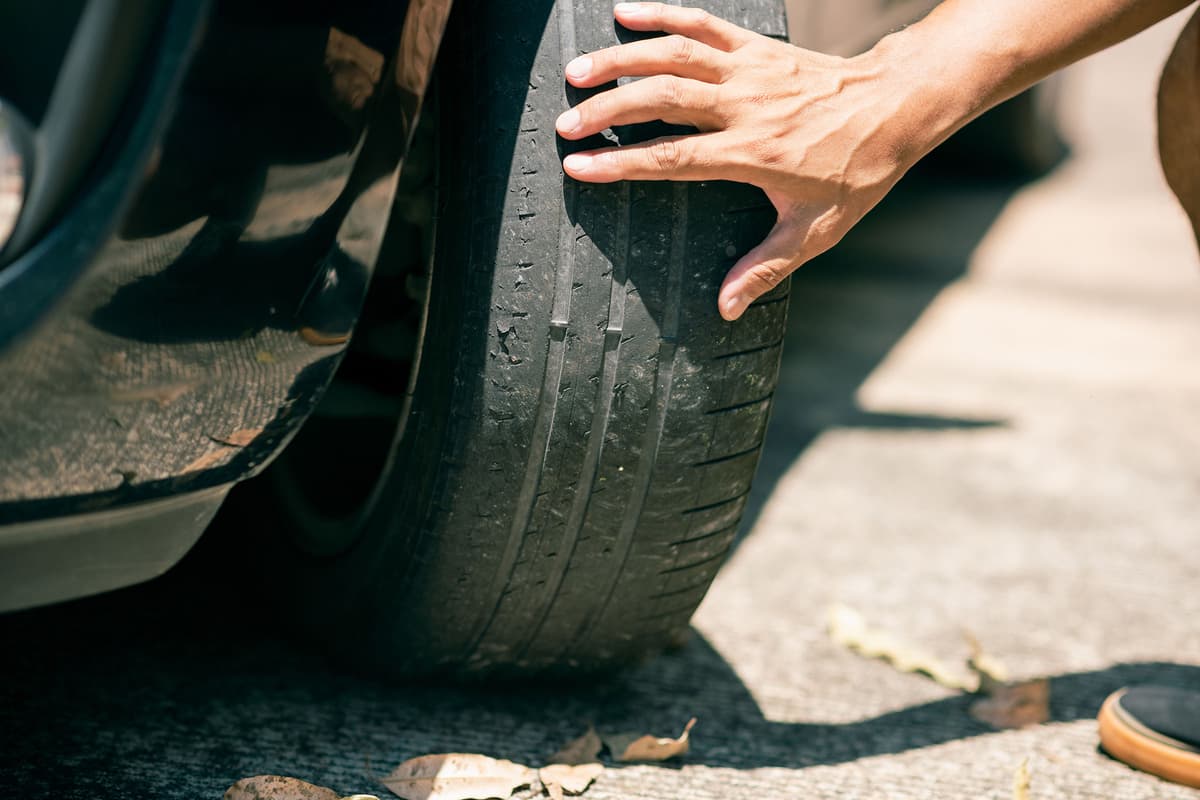
Tires wearing out quickly? Learn the hidden causes, simple fixes, and how to get safer replacements with convenient lease-to-own financing.
Key takeaways
Premature tire wear usually comes from preventable issues, especially underinflation, alignment drift, skipped rotations, and everyday driving habits that quietly grind tread down.
A simple maintenance rhythm can add meaningful miles to your tires: Check PSI monthly, rotate every 5,000 – 7,500 miles, and get alignment checked when seasons change or after a hard pothole hit.
Know the safety line: Replace tires at 2/32" tread depth and any time you see cords, severe uneven wear, bulges, or sidewall damage; and if you need replacement now, Snap’s lease-to-own financing can help you pay over time.
Your tires may seem to wear out way sooner than you expected. That’s because tire life can vary a lot, ranging from about 25,000 miles to 100,000 miles, depending on the tire and how it’s used.
But here’s the part most tire advice skips: Premature wear is often the result of a predictable chain reaction – air pressure drifting out of spec, alignment slowly shifting, rotations getting skipped, and driving patterns that quietly grind rubber away.
When money is tight, that cycle hurts twice: You lose tread faster and you face replacement sooner. Let’s look at the real culprits and how drivers can extend tire life – without overspending.
The hidden factors that destroy tire life
Most premature tire wear comes from a handful of issues that build up quietly over time, and once you know what to look for, they’re surprisingly easy to spot and fix.
Underinflation (the #1 cause of premature wear)
Underinflation is sneaky because you often can’t see it. And your TPMS light usually doesn’t come on until pressure is severely low, which means a lot of wear can happen before you get a warning.
Why PSI drops in heat and cold
Temperature swings change tire pressure. A common rule: about 1 PSI for every 10°F change. If the weather drops 30°F overnight, your tires can lose around 3 PSI – enough to push you below spec.
How underinflation wears your tread
Low PSI makes the tire “squat,” putting extra load on the outer edges of the tread. That creates the classic pattern: both shoulders wearing faster than the center. It also generates more heat, and heat accelerates wear.
Real-world impact
Keeping tires properly inflated can extend tire life by thousands of miles (about 4,700 miles, according to the National Highway Traffic Safety Administration). If your tire would normally last around 25,000 – 50,000 miles, that can translate to roughly 10% – 20% of total life saved just by staying on top of pressure.
Do this today (takes 5 minutes):
Find the recommended PSI on your driver-side door jamb placard (not the number molded on the tire sidewall).
Check pressure when tires are “cold” (not driven for 3+ hours).
Inflate to the placard PSI. Recheck in 30 seconds.
Repeat monthly. Also check the spare if your vehicle has one.
Misalignment and suspension wear
Alignment doesn’t usually fail all at once – it drifts. One pothole, one curb tap, or worn suspension parts can slowly tilt the wheel angle so the tire scrubs the road instead of rolling cleanly.
Common signs you can feel:
The car pulls slightly left or right on a straight, flat road
The steering wheel sits off-center
You feel vibration at highway speeds
Your tread looks uneven (one edge looks “shaved” compared to the other)
The wear pattern clue:
Inner edge worn or outer edge worn (but not both) often points to alignment/camber/toe issues.
Cupping (scalloped dips around the tread) often points to shocks/struts or balance problems.
Practical rule
If you see uneven wear on one tire, don’t just replace that tire and move on. Fix the cause, or the new tire will follow the same path.
Driving habits you don’t realize are harmful
You don’t need to drive aggressively to wear tires quickly. A few small habits compound over thousands of miles.
Quick acceleration: scrubs tread, especially on front-wheel-drive vehicles
Hard braking: creates flat spots and heat; chews front tires
High-speed cornering: loads the tire's outside shoulder and grinds rubber away
For one week, try smooth starts, longer following distance, and earlier braking. You’ll reduce wear and you may notice fewer steering vibrations over time.
Seasonal damage
Tires don’t just “wear” – they also age.
Cold weather stiffens rubber compounds, which can increase vibration and can make low-pressure issues show up faster.
Heat increases pressure and stress. Hot pavement plus underinflation is a rough combo because heat buildup accelerates degradation. Keep an eye out for sidewall cracking, especially if you park outdoors, drive in extreme temperatures, or have older tires.
How to make your tires actually last longer
Here’s a simple plan you can follow. No guesswork needed.
Monthly PSI checks (non-negotiable)
Check pressure monthly when tires are cold. Put it on your calendar for the same day every month (such as the 1st).
Rotate on a real schedule
Most manufacturers recommend rotating tires every 5,000 – 7,500 miles (often aligned with oil changes). If you don’t know your mileage since the last rotation, start fresh. Rotate now, then track it going forward.
Seasonal alignment checks (and after potholes)
An alignment check when seasons change can help catch slow drift before it chews up your tread. And if you hit a pothole hard enough to say “wow,” consider that your alignment may have shifted. Even one bad impact can speed up wear.
Match tires to your region
If you regularly drive in severe winter conditions, winter tires may make sense. If you live in a hot climate, avoid running winter tires year-round. For mixed climates, quality all-season tires are often a practical choice.
Use treadwear clues to diagnose problems.
Both edges worn = likely underinflation
Center worn = likely overinflation
One edge worn = alignment/suspension
Cupping = shocks/struts or balance
This is how you stop the cycle: Treat the wear pattern as information, not just an expense.
The tire longevity checklist: 12 habits that extend tire life
Use this as a print-and-post list (fridge, glovebox, or notes app):
Check PSI monthly (cold tires).
Inflate to the door-jamb placard PSI (not the tire sidewall).
Recheck PSI when seasons shift (big temperature swings).
Rotate every 5,000 – 7,500 miles (or per your manual).
Get alignment checked if the car pulls or steering wheel is off-center.
Get alignment checked after a hard pothole or curb strike.
Replace worn shocks/struts if you see cupping or persistent bouncing.
Avoid hard launches; accelerate smoothly.
Brake earlier; reduce hard stops.
Slow down for tight corners and rough roads.
Inspect tread depth monthly; replace at 2/32".
Inspect sidewalls for bulges, cuts, and deep cracking.
When replacement is the safer choice
Some tire problems are fixable. Others are red flags.
Tread's down to legal depth
Tires should be replaced when tread is worn down to 2/32 of an inch. You can use built-in treadwear indicators or the penny test. Place a penny into a main tread groove with Lincoln’s head facing down. If you can still see the top of his head above the tread, the grooves are too worn and it’s time to replace the tire.
Irregular wear patterns
Replace (and diagnose the cause) if you have:
One tire worn far faster than the others
A bald strip on one edge
Visible cords or steel belt showing (immediate replacement)
Sidewall damage
Replace if you see:
Bulges or bubbles
Cuts that expose fabric/cord
Deep cracking
If your tread is near the limit or the tire is damaged, waiting can turn a tire problem into a much bigger problem.
Making tire replacement convenient with Snap Finance
Sometimes the safer choice is replacement, but paying the full cost upfront isn’t always realistic. Snap can help you pay over time with lease-to-own financing.
Here’s what that can look like:
Apply in minutes and get a decision in seconds, no credit needed.¹
If approved, get approval amounts from $300 to $5,000 in lease-to-own financing.²
Get tires and make convenient payments over time per your lease agreement.
Here's a quick example of how it works: Suppose you visit a Snap Finance partner tire retailer and find the tire set you need. It costs $700 but you can't pay that much upfront. Instead of paying all at once, you apply to Snap Finance, get approved for lease-to-own financing, and then pay over time with smaller regular payments according to your lease agreement.
Ready to get started? Find a tire shop near you or apply online.
The advertised service is a lease‑to‑own agreement provided by Snap RTO LLC. Lease‑to‑own financing is not available to residents of Minnesota, New Jersey, and Wisconsin.
1 Not all applicants are approved. While no credit history is required, Snap obtains information from consumer reporting agencies in connection with applications, and your score with those agencies may be affected.
2 Approval amounts vary from $300 to $5,000, subject to underwriting, and apply only to the cash price of leased items.