What retail businesses get wrong about customer acquisition

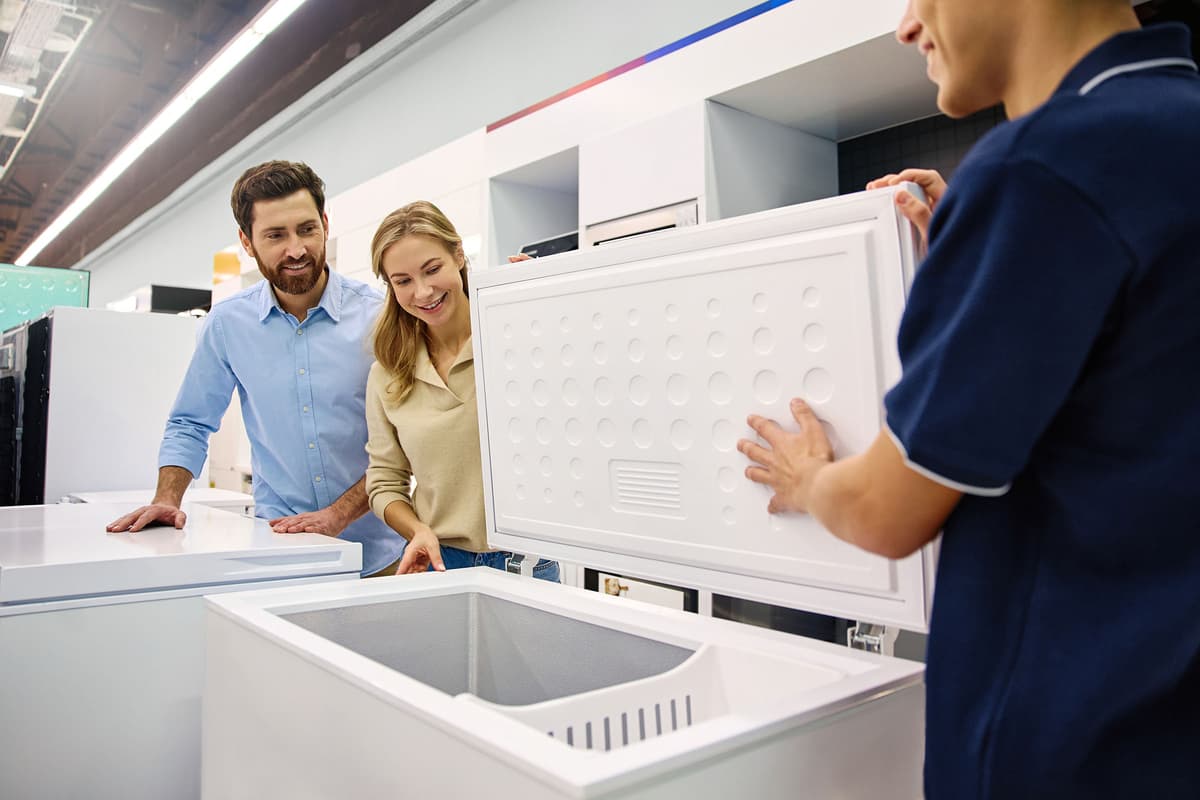
Many retailers treat customer acquisition as a marketing challenge, even though the biggest opportunities may exist inside the store. Learn how improving conversion rates, offering access to financing, encouraging referrals, and building customer loyalty may support efforts to grow your customer base more efficiently.
Key takeaways:
Improve in-store conversion before increasing marketing spend to make better use of every customer who walks through your doors.
Offering access to financing may help broaden your addressable market by making purchases more accessible to a wider range of shoppers.
Simple referral prompts and post-purchase follow-ups may help generate new business without a formal referral program.
Retaining existing customers through great experiences and ongoing communication may be more cost-effective than acquiring new ones.
Many retail store owners acquire customers through advertising, social media, SEO, or paid search campaigns. While those tactics are effective, retailers can overlook a much bigger opportunity: the customer experience that happens inside the store.
In practice, some acquisition gaps may be on the sales floor, not at the top of the marketing funnel. A business can spend thousands driving traffic through the door, only to lose potential buyers because they can't find the right product, don't understand pricing, or don't have a payment option that fits their budget.
The result is a hidden acquisition problem. You're paying to attract shoppers, but your store isn't converting enough of them into paying customers.
Instead of focusing only on how to get more customers in the door, learn how to convert more of the people already walking through it, expand your addressable market, and increase repeat business.
The floor can be a key marketing channel
Imagine two retailers:
Store A spends heavily on advertising and gets 1,000 visitors per month but converts only 15% of them.
Store B gets the same number of visitors but converts 25% of them.
Store A makes 150 sales. Store B makes 250 sales.
Without increasing traffic at all, Store B would acquire 100 more customers every month. Conversion can be a high-leverage metric in retail. Improving conversion by a few percentage points may help drive revenue without a major increase in advertising spend.
The relationship between traffic and conversion
Most retailers obsess over traffic because it's visible and easy to measure. But conversion is often where the real leverage lies.
If your conversion rate rises from 20% to 25%, that would represent a 25% increase in customers, assuming traffic stays the same without spending another dollar on advertising.
How to calculate acquisition cost
Many retailers underestimate the cost of acquiring a paying customer. Use this simple formula to better understand how much acquisition is costing your business:
Customer acquisition cost = (Marketing spend + promotional costs + sales incentives) ÷ Number of new customers
The overlooked question
Now ask yourself: What if you could convert more of the customers you're already paying to attract?
That's often where financing enters the acquisition conversation. A customer who wants the product but hesitates on price may benefit from considering a pay-over-time option, such as Snap-branded lease-to-own financing and loan options. Retailers that improve floor conversion may find that acquisition and financing are more connected than they thought.
The repeat purchase gap
Retailers can spend most of their marketing budget trying to attract new customers. While bringing in new shoppers is important, it's often more expensive than encouraging existing customers to come back. Acquiring a new customer can be more expensive than retaining an existing one.
Consider the customers who have already purchased from you. They know your brand, have experienced your customer service, and trusted your business enough to make a purchase. That may make them more likely to buy again than someone discovering your store for the first time.
However, many retailers can lose touch with customers after the sale. Once the transaction is complete, communication stops until the customer needs something months or years later.
A simple retention strategy doesn't require expensive software or a sophisticated CRM. Start by collecting customer contact information with consent and staying in touch via email or text. Send reminders about seasonal products, announce new inventory, share maintenance tips, or promote special events. Even a few well-timed messages throughout the year can keep your business top of mind.
Customer service also plays a major role in repeat purchases. Following up after a sale to make sure customers are satisfied demonstrates that your relationship extends beyond the transaction. If an issue arises, resolving it quickly can strengthen trust and increase the likelihood that the customer returns.
Offering access to financing options may help support retention. Financing, including options through Snap Finance, may help shoppers access products or make purchases they might otherwise have postponed. When those customers have a positive buying experience, from application through checkout, they may be more likely to return for another big purchase.
Retailers can reinforce that relationship by reminding customers that financing may be available on future purchases, introducing complementary products, or thanking them for choosing the business. Small touches can help turn a one-time financing customer into a returning customer.
Where to focus your acquisition energy first
Customer acquisition doesn't have to begin with a larger marketing budget. Sometimes, the biggest opportunity is improving what happens after customers walk through your doors.
A useful way to prioritize your efforts is to start with floor conversion before expanding the funnel. If your team converts only a fraction of existing traffic into sales, investing heavily in advertising sends more potential customers into the same process. Improving in-store execution first may help future marketing dollars work more effectively.
Once your conversion process is consistent, expanding your reach through paid media, local marketing, search, or social advertising may become more effective. Higher conversion rates may contribute to lower acquisition costs when you're generating more sales from the same amount of traffic.
Financing programs may play a role in this process because they can support the economics of multiple acquisition channels. Whether a customer discovers your brand through an online search, a referral, or by driving past your store, pay-over-time options may reduce checkout hesitation and provide another way for shoppers to get what they need.
Offering access to financing, including options available to a range of credit profiles, subject to approval and product availability, may help broaden your audience. Customers who may have assumed your products were outside their budget may be more likely to consider your store when they know pay-over-time options are available. Your existing marketing may resonate with more shoppers without requiring a change to your product assortment.
Successful customer acquisition may reduce barriers that prevent casual shoppers from becoming customers, create positive buying experiences that encourage repeat business, and build a reputation that generates referrals over time.
Retailers that focus on conversion, retention, and financing together may create a stronger foundation for sustainable growth than those relying solely on increasing advertising spend.
How Snap Finance may support customer acquisition
By offering customers access to pay-over-time options, retailers may support customer acquisition, conversion efforts, and repeat business without necessarily increasing their marketing budget.
Learn how Snap Finance may support your customer acquisition strategy, conversion efforts, and long-term business goals.
Interested in learning more? Check out these resources from Snap Finance:
How to expand your customer base without expanding inventory
The hidden revenue leak in retail: Customers who don’t ask about lease-to-own financing
Snap Finance, its affiliates, and partners offer consumers a range of solutions, which may include lease-to-own financing, retail installment contracts, installment loans, and credit cards. Product availability may vary by state, merchant, industry, and qualification criteria. Certain products are issued by independent merchants or bank partners and serviced by Snap Finance LLC. For more information, visit https://snapfinance.com/legal/products