Space heater room size guide: What size heater do you need?
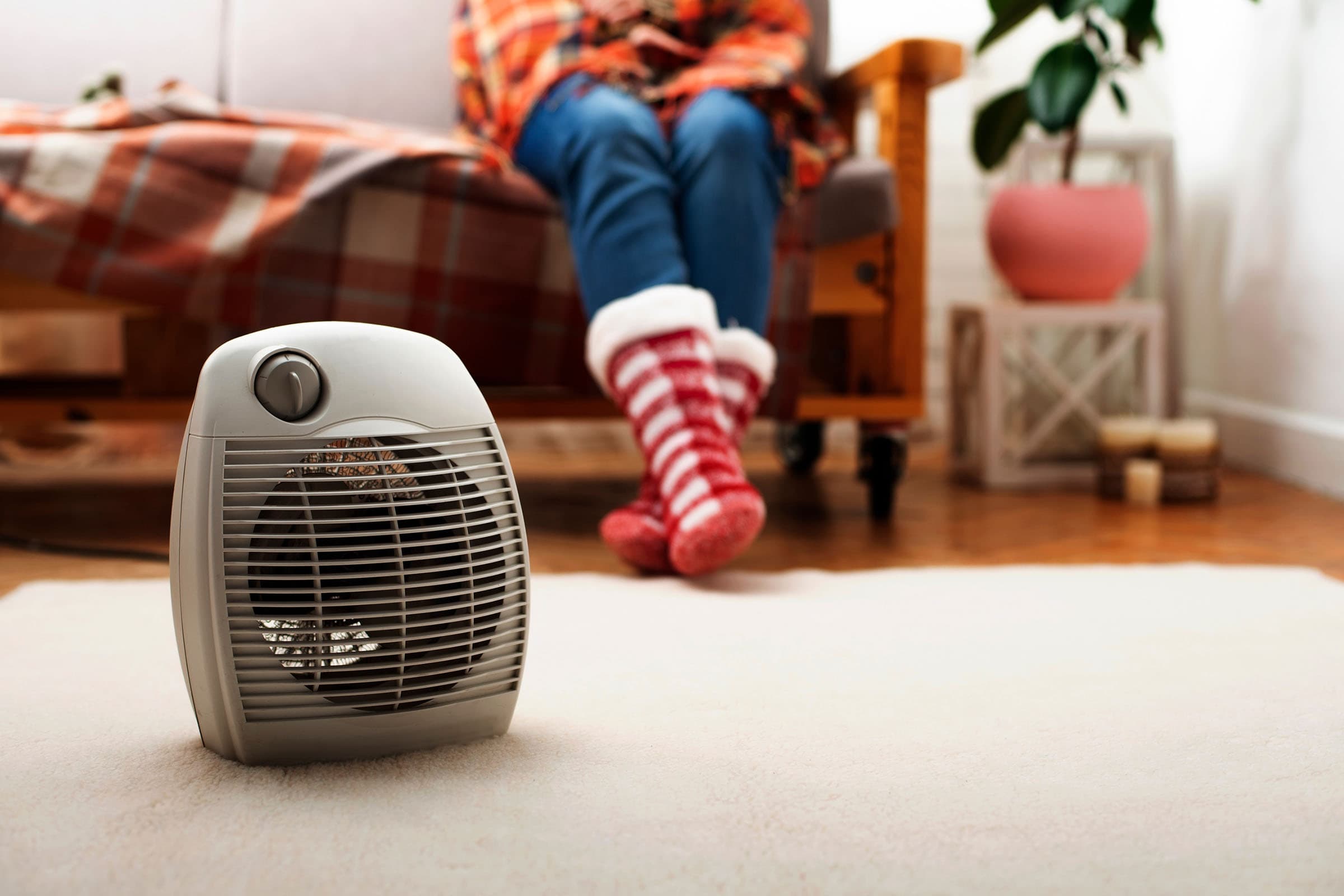
Choosing a space heater starts with knowing the size and conditions of the room you want to warm. Learn how to compare coverage, heater types, useful features, operating costs, and safety considerations before you shop.
Key takeaways
Measure the room and compare its square footage with the heater manufacturer’s recommended coverage area.
Consider ceiling height, insulation, drafts, windows, and outside temperatures because they can affect how effectively a heater warms the space.
Compare practical features and operating costs instead of automatically choosing the largest or most feature-packed model.
Follow the manufacturer’s operating instructions and current space heater safety recommendations.
Space heater room size is one of the most important things to consider when choosing a portable heater. A compact heater that works well beside your desk in a home office may not warm a large living room the same way.
But bigger does not automatically mean better. Start by measuring the space you want to warm, then compare that measurement with the manufacturer’s recommended coverage. You should also consider the room itself, including ceiling height, insulation, drafts and windows, along with heater type, useful features, and operating costs.
Here’s how to narrow your options without turning your shopping trip into a heating-engineering project.
How does space heater room size affect which heater you need?
Start with a simple measurement. Multiply the room’s length by its width to calculate its approximate square footage.
For example, a 10-by-12-foot bedroom is about 120 square feet. A 15-by-18-foot living room is about 270 square feet.
Once you have that number, check the manufacturer’s stated coverage area for each heater you’re considering. That specification is generally more useful than relying on one universal wattage formula because heaters with the same wattage can be designed and rated for different spaces. Current 1,500-watt models, for example, can have manufacturer-stated coverage areas that differ significantly.
Square footage also does not tell the whole story. A heater may have to work harder in a room with:
High ceilings
Large or numerous windows
Poor insulation
Exterior doors or noticeable drafts
Open doorways leading to other rooms
Very cold outside temperatures
Because every home is different, use room measurements to narrow your choices, then follow the heater manufacturer’s stated coverage and operating guidance.
What size space heater is right for your room?
Think about the room you will actually use instead of automatically choosing the heater with the highest output. A model intended for spot heating may work well near a desk but may not be designed to warm an entire family room.
This chart offers a simple starting point. Always confirm the manufacturer’s recommended coverage before choosing a model.
Space | Example room size | What to look for |
Small home office | About 80–120 sq. ft. | Compact heater rated for the room; targeted warmth may be enough |
Bedroom | About 120–200 sq. ft. | Coverage that matches the room, adjustable thermostat and quieter operation |
Medium living room | About 200–300 sq. ft. | Manufacturer-rated room coverage plus features that help distribute warm air |
Large or open area | 300+ sq. ft. | Check coverage carefully; one portable heater may not be designed to warm the entire space |
Wattage can still help you compare models. Many full-size portable electric heaters use up to 1,500 watts, but wattage tells you how much electrical power the heater draws at its maximum setting – not exactly how a particular heater will perform in your room.
That is why the best order for comparison is usually room size first, manufacturer-rated coverage second and wattage third.
Which type of space heater works best for different rooms?
Once you know roughly how much space you want to warm, think about how you use that room. Different heater designs deliver warmth differently, so the type of heater can matter as much as its size.
Here are some of the most common options and where each may fit:
Ceramic heaters: These typically warm up quickly and often use a fan to distribute heated air. They can work well in bedrooms, home offices and other small or medium rooms. Fan noise may be a consideration if you need a quiet workspace or sleeping area.
Radiant or infrared heaters: These direct warmth toward people and objects rather than relying primarily on warming all the air in a room. They can be useful when you want more targeted warmth in one area.
Oil-filled radiator heaters: These tend to warm more gradually and provide steady heat without a fan. They may appeal to shoppers who prioritize quiet operation, although they can be heavier and slower to warm a space.
Fan-assisted heaters: A fan can help move heated air farther across a room. Oscillating models can also distribute warmth in multiple directions.
Some portable heaters include a fan-only setting, giving you another way to use the appliance outside the coldest months.
Think about where the heater will sit, how quickly you want to feel warmth, whether fan noise matters and whether you expect to move the heater between rooms.
What space heater features are worth paying for?
A long feature list does not necessarily mean a heater will work better for your needs. Start with controls and safety features you are likely to use regularly.
Some practical features to compare include:
Adjustable thermostat: Helps the heater cycle based on your selected temperature instead of running continuously.
Multiple heat settings: Gives you more control over heat output and electricity use.
Timer: Lets you select how long the unit operates before shutting off.
Tip-over protection: Designed to shut the unit down if it tips over.
Overheat protection: Designed to shut the heater down if internal temperatures become too high.
After those basics, consider convenience features such as oscillation, remote controls, digital displays, carrying handles and smart controls. Some shoppers may use these every day. Others may be better served by a simpler model.
Current heater models commonly pair adjustable thermostats and timers with safety features such as overheat protection or tip-over shutoffs.
Consider features based on how and where you plan to use the heater instead of paying more simply because a model has the longest specification sheet.
How much does it cost to run a space heater?
The price of the heater is only one part of the cost. How much electricity it uses, and how often you run it, can affect your household utility bill over time.
You can estimate operating costs with this simple calculation:
Heater wattage ÷ 1,000 × hours of use × your electricity rate per kilowatt-hour = estimated operating cost
For example, imagine a 1,500-watt heater operating at full power for four hours:
1,500 ÷ 1,000 × 4 hours = 6 kilowatt-hours
If your electricity rate were $0.15 per kilowatt-hour, that would equal about $0.90 for four hours of operation. Running at full power for four hours every day for 30 days would equal about $27 at that example rate.
Your actual cost can differ because electricity rates vary and thermostatically controlled heaters may cycle on and off rather than drawing maximum power continuously.
Before you shop, check your utility bill for your local electricity rate. You can then compare wattage and estimated use across the heaters you are considering.
Portable electric heaters are generally intended to provide supplemental heat to a space rather than function as the primary heating system for an entire home. If you spend most of your evening in one room, heating that occupied space may be different from trying to use several portable heaters as a substitute for whole-home heating.
For more household energy ideas, read Appliance upgrades that can lower your utility bills.
How can you use a space heater safely?
Portable heaters need space around them, a proper electrical connection and attentive use. Always read the instructions for your particular heater before turning it on.
Current U.S. Consumer Product Safety Commission guidance recommends several basic precautions:
Keep the heater at least three feet from beds, clothing, curtains, papers, sofas and other combustible materials.
Put the heater on a stable, level surface where it is less likely to be knocked over.
Plug an electric portable heater directly into a wall outlet rather than an extension cord or power strip.
Do not run the cord underneath rugs or carpeting.
Do not leave a portable heater running unattended in a confined space.
Do not leave a portable heater running while you sleep.
Pay particular attention to children and pets around the heater.
You should also check the CPSC recall database when shopping for or using a portable heater. Recall information changes as new safety issues are identified, so looking up the brand and model can help you confirm whether current warnings apply.
What if the right heater doesn’t fit your budget today?
Once you know the room size, heater type and features you need, the next question may be how to cover the upfront cost.
Snap Finance provides lease-to-own financing for eligible merchandise. In a lease-to-own agreement, Snap purchases the merchandise from the retailer and leases it to you. You can use the merchandise while making scheduled lease payments, and you obtain ownership after making all required payments and completing the terms of your lease agreement.
If approved, you may qualify for $300 to $5,000 in lease-to-own financing, subject to underwriting. Start with the appropriately sized heater and features you actually need, then consider how you want to pay for eligible merchandise.
Choose the right heater for your space and budget
Choosing a portable heater does not have to start with the biggest model on the shelf. Measure the space, check the manufacturer’s stated coverage, consider the conditions in the room and focus on features you will actually use. Then you can narrow your options based on what your home needs rather than simply choosing more heat than necessary.
Start shopping today. Apply for Snap Finance lease-to-own financing.
Want more ideas for shopping for home comfort and appliances? Explore these Snap Finance articles next:
Beat the heat: Top affordable air conditioners and fans for summer comfort
Emergency appliance replacement: What to do when your fridge or washer dies unexpectedly
Stay cool, stay efficient: Best energy-saving AC units for small spaces
The advertised service is a lease‑to‑own agreement provided by Snap RTO LLC. Lease‑to‑own financing is not available to residents of Minnesota, New Jersey, and Wisconsin.